Cardano [ADA] and Polkadot [DOT] were once pitched as Ethereum’s [ETH] biggest challengers. Fast forward to today, and the question on everyone’s mind is – Which of these networks is still alive?
Here’s a look at their numbers, and which one looks better placed to survive the long game.
Who’s building, and who’s showing up?
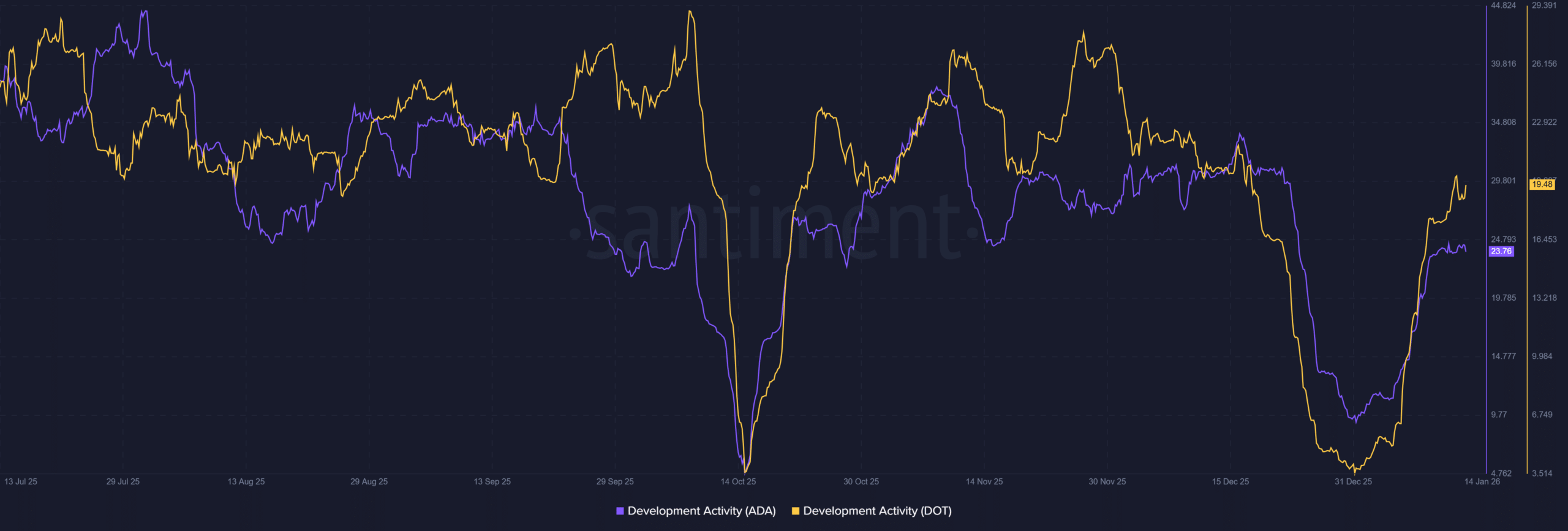
Source: Santiment
Development activity on both Cardano and Polkadot has stayed active, but DOT might be more consistent. While both saw dips during market slowdowns, Polkadot’s developer activity rebounded faster and often.
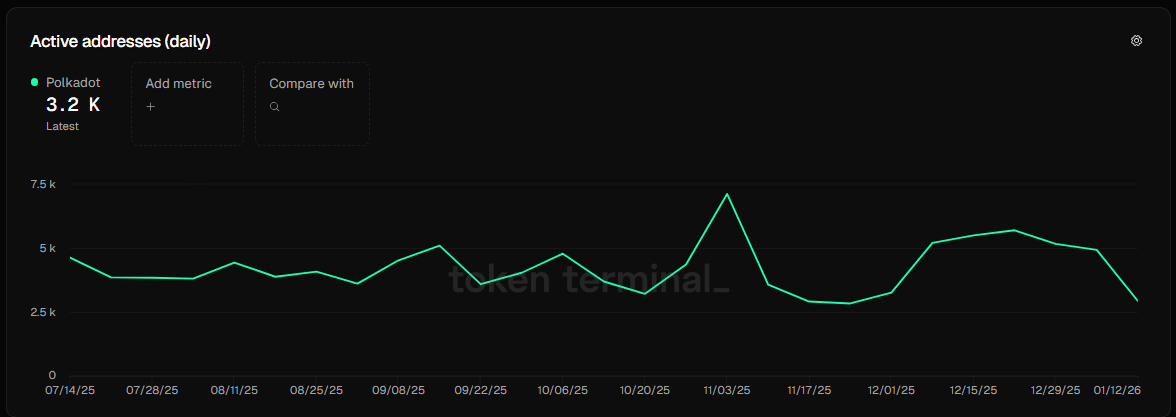
Source: Token Terminal
There’s a greater contrast with user activity though. Polkadot’s daily active addresses have been in the low thousands and spike only occasionally.
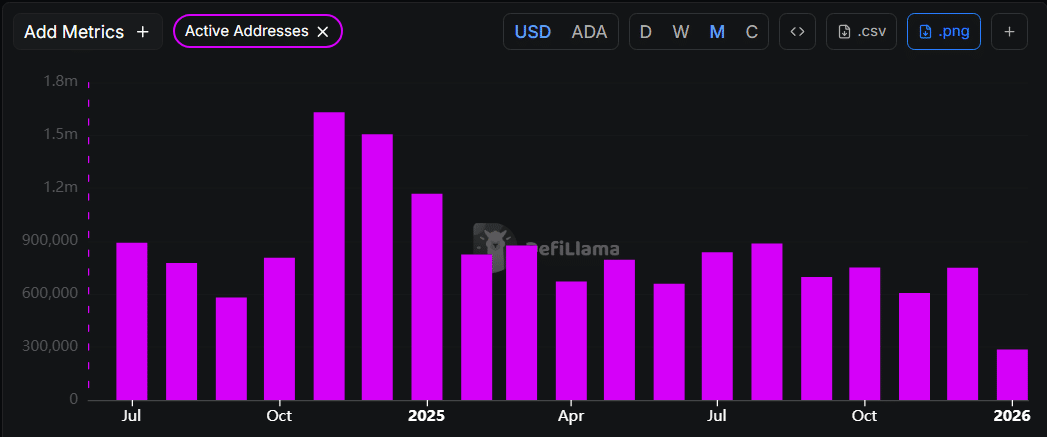
Source: DeFiLlama
Cardano, on the other hand, still attracts far more users, with monthly active addresses in the hundreds of thousands!
Activity vs survival
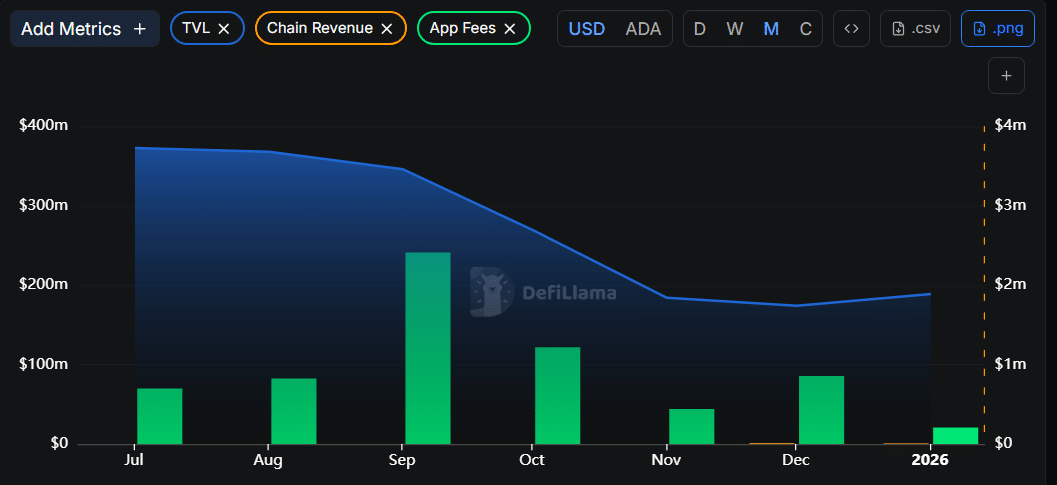
Source: DeFiLlama
On the surface, neither Cardano nor Polkadot looks particularly busy right now, but they are different in subtle ways.
Cardano’s TVL has been steadily trending down over recent months, so capital is drifting away. That said, ADA still sees occasional spikes in app fees. This means users do show up during bursts of activity… even if they don’t stay long.
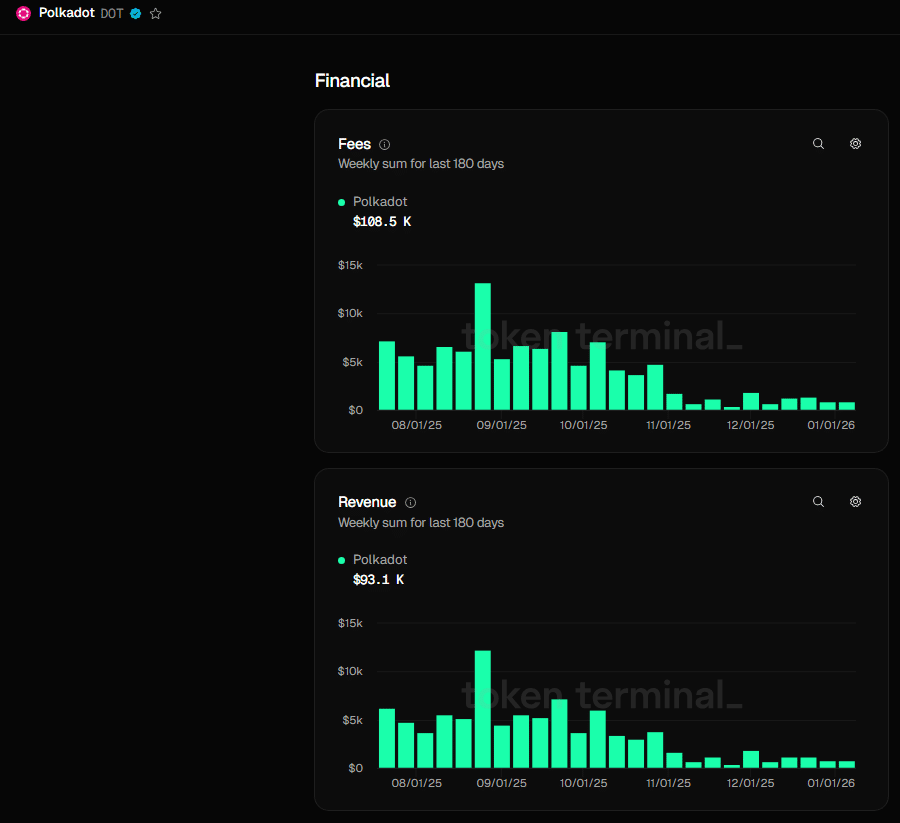
Source: Token Terminal
Polkadot’s figures flatter, to say the least. Fees and revenue have been consistently low, with no meaningful spikes to speak of. The network’s been stable too, while not generating sustained usage.
Who’s still being talked about?
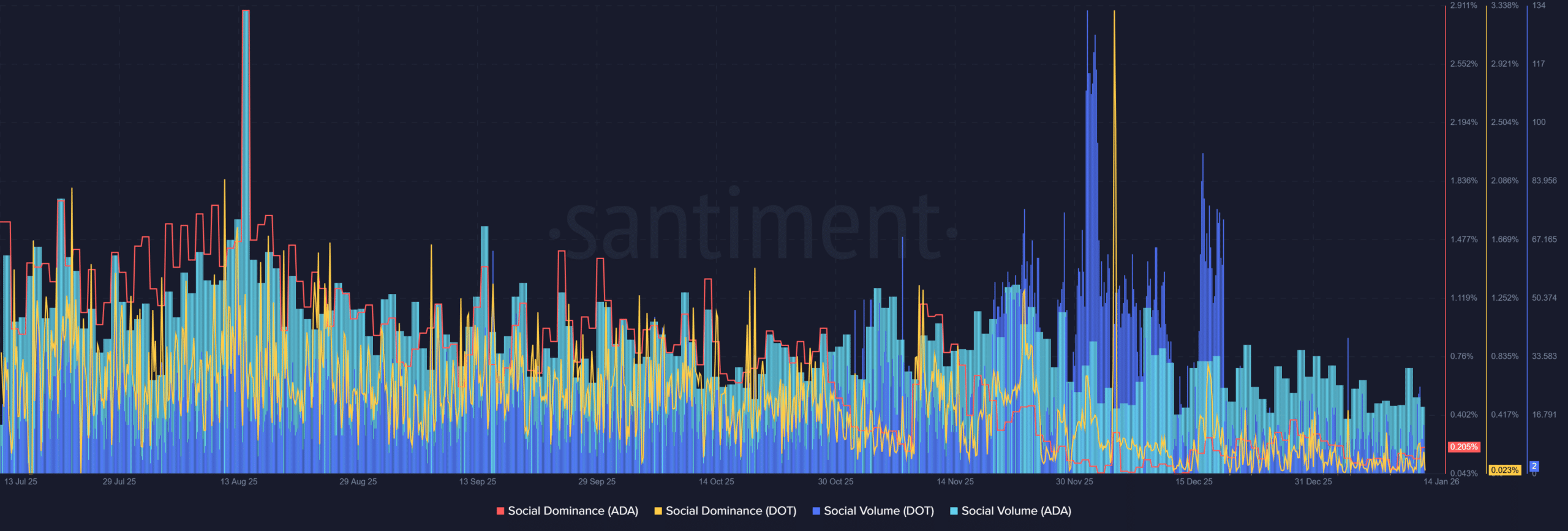
For most of the period, ADA has commanded higher social volume and dominance, even during quieter times. While that doesn’t always translate into price action, there is mindshare.
Source: Santiment
Polkadot, by contrast, only saw brief surges in attention, mostly around late November. Outside of those moments, DOT has faded quickly from the social radar.
2026 watchlist
This year will decide which chain still matters. Cardano is pushing on execution (education, governance, RWAs, and enterprise Web3 links) areas that don’t cause talk, but compound over time. Progress is slow, yet measurable, and that consistency will matter if adoption really scales.
On the other hand, Polkadot is betting on structure. The planned reward halving in March 2026 and a proposed hard cap is intended to fix long-term inflation just as Web3 becomes mainstream. If Web3 gaming, RWAs, and data ownership break out, Polkadot’s infrastructure could become essential.
Final Thoughts
Cardano still looks alive thanks to users and mindshare.
Polkadot relatively quiet, but reward halving and supply cap could change things.
Samyukhtha L KM is a Financial Journalist and Market Analyst at AMBCrypto whose work is defined by one central question: Is the latest trend in blockchain hype, or history in the making?
Her expertise is built on a strong academic foundation, with a Master’s in Journalism and Mass Communication from Amity University and a Bachelor’s in Commerce from the University of Madras. This dual qualification equips her with a unique skill set: the financial acumen to dissect market mechanics and the journalistic rigor to investigate and communicate complex subjects with clarity.
Samyukhtha specializes in analyzing the socio-economic impact of blockchain adoption and assessing the viability of new market narratives. This includes a focus on high-velocity, community-driven assets such as memecoins, where she evaluates sentiment and fundamentals. She is dedicated to providing readers with insightful, well-researched commentary that looks beyond immediate market moves to understand the long-term implications of decentralized technology.







![Real-world assets [RWA]: How to invest in Gold & Real Estate on-chain](https://eng.ambcrypto.com/wp-content/uploads/2026/02/Samyukhtha-5-400x240.webp)