Crypto News

Are ‘zombie chains’ with no development activity still a thing?

Some blockchains refuse to die. That’s not always a good thing.

Published

on

There was a time when every new blockchain promised to be the Ethereum killer. Whitepapers were glossy, roadmaps were ambitious, and Discord channels were buzzing at all hours.

Then the bear markets came in, the developers quietly logged off, and the GitHub commits… stopped. So, what happens to a blockchain when everyone moves on, but the chain itself doesn’t quite die?

This is the strange, half-lit world of “zombie chains.”

The tale of the undead

In crypto, a “zombie chain” is a blockchain that is still technically running. Blocks are produced, transactions can be processed, but almost nobody is actually using them.

The network exists, but only just.

What separates a zombie chain from a dead one is persistence. Dead projects are fully abandoned.

Zombie chains, by contrast, keep the lights on. They continue to operate without innovation or meaningful engagement.

This half-alive state creates a big risk. With few developers maintaining the code and little community oversight, these networks become fragile. Ecosystems fail to grow.

And for investors – If a blockchain has no builders and no users, what exactly is the token meant to represent?

Do zombie chains still exist today?

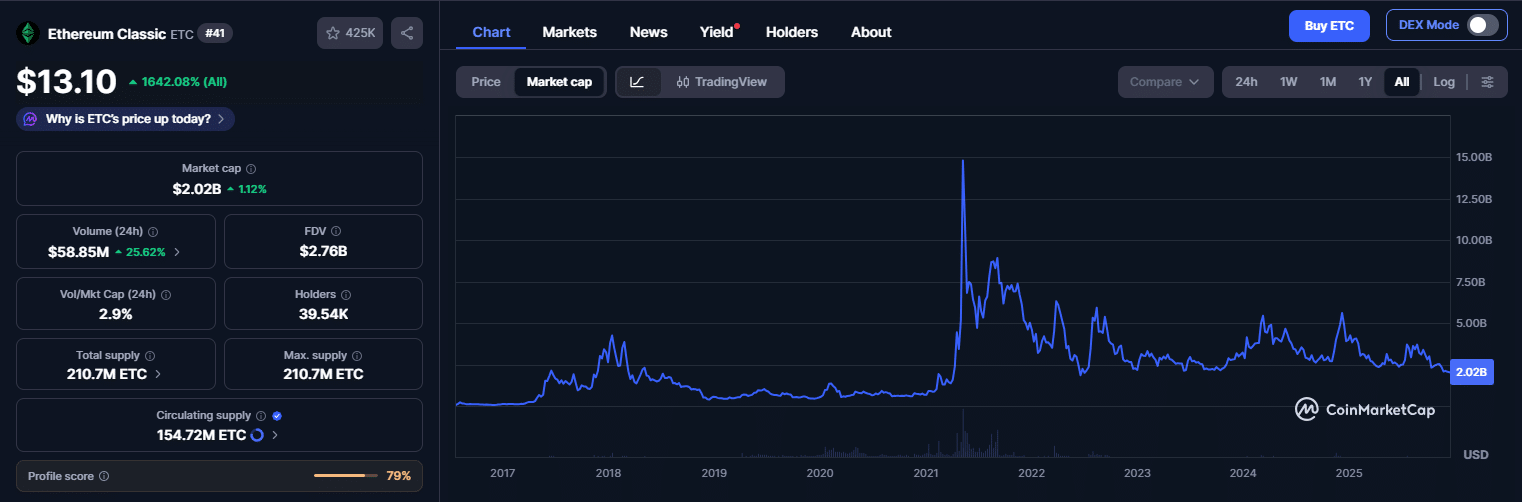
Ethereum Classic [ETC] and Algorand [ALGO] make the case. ETC is up massively from its early lows, but the charts only show brief market cap bursts, followed by years of flat relevance.

Source: Coinmarketcap

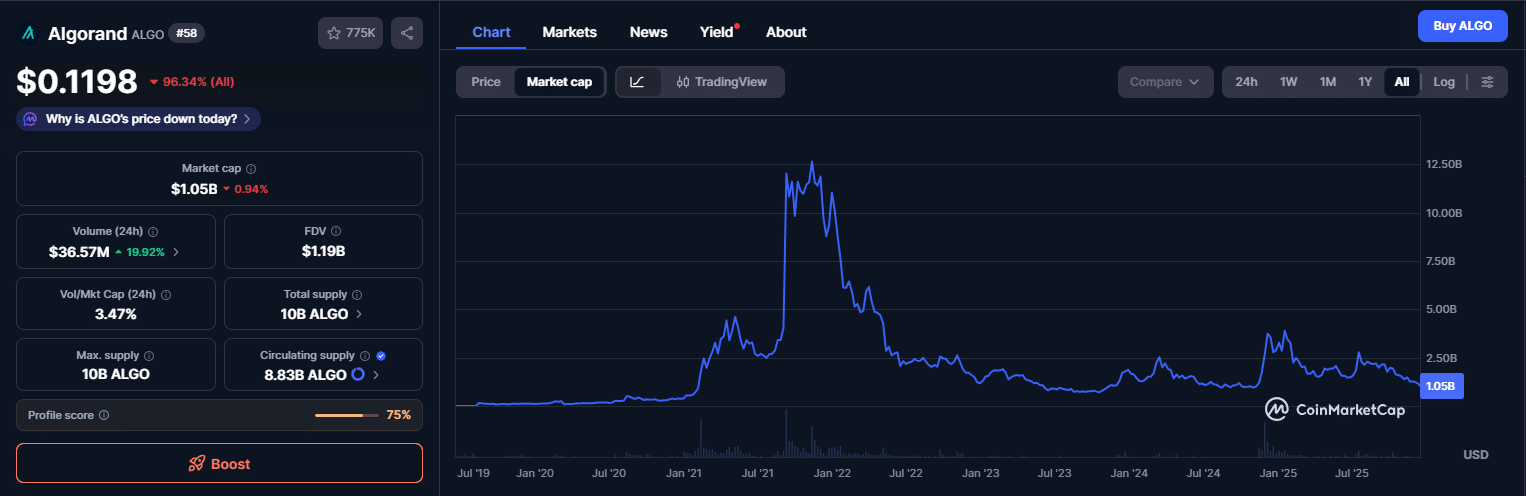
Algorand’s view is worse. Despite moments of revival, its market cap is merely a fraction of its peak right now.

Source: CoinMarketCap

Both chains still run, but sustained growth hasn’t followed.

Chains that refused to die

Not every blockchain that fell out of favor stayed there. They came back and went on to become household names!

Solana [SOL] is the clearest example. After the FTX collapse in 2022 dragged its price down more than 90%, many assumed the chain would hollow out.

Instead, developers kept shipping. Activity slowly rebuilt and by 2024, Solana was hosting EVERYTHING.

Today, Solana’s infrastructure is serious enough to be part of global policy conversations.

Even BNB Chain, widely expected to fade as the network navigated murky waters, never actually did. It continues to process massive transaction volumes, especially in gaming and low-cost applications.

Today, the network is thriving under new leadership and a base in Abu Dhabi.

Can zombies kill?

The biggest issue with these chains is liquidity. Thin trading makes it harder to enter or exit positions without moving the price against yourself. This makes every trade a gamble.

That illiquidity feeds volatility as well. On underused networks, even modest trades can cause price swings, creating the illusion of action where none really exists.

Ethereum Classic is a textbook case – It often moves more often than Ethereum [ETH] because there’s less depth to absorb trades.

Also, fewer developers means slower upgrades, weaker security, and difficulty keeping up with new standards. Over time, these chains struggle to connect with newer tools. And of course, there’s the perception risk of it all.

Once a blockchain earns a reputation for missing its moment, it’s hard to come back.


Final Thoughts

  • Zombie chains still exist in 2025, but survival now depends on liquidity and use cases.
  • For investors, a “still running” blockchain without users or builders is risk.