
Key Takeaways
What keeps the risk of a crypto crash alive despite ETFs?
Macro shocks, ETF outflows, and fading on-chain activity all seemed to hint at a fragile rally.
Why did BTC dominance drop in 2025?
Capital rotated into altcoins like ETH and SOL, driven by institutional flows into Layer-1s.
We’re less than two months into a full post-election cycle year.
On the bullish side, 2025 has so far delivered regulatory clarity – The GENIUS Act, the XRP-SEC legal settlement, and the Bitcoin [BTC] Strategic Reserve Act have pushed fresh institutional capital into the tape.
However, macro headwinds are still shaking things up. Liberation Day FUD sparked multi-billion outflows, and tariff-driven inflation has muted risk appetite. In this context, is another full-blown crypto crash looming?
Regulatory wins light up institutional demand
2025’s first big split – Crypto flows started moving beyond just BTC.
Backing this shift, H2 saw BTC’s bull rally hit the softest patch, with Bitcoin dominance [BTC.D] sliding to a yearly low of 57%. Normally, a dip like this bleeds capital from the market. However, not this time.
Instead, funds rotated into high-beta plays, hunting altcoins for outsized upside. Ethereum dominance [ETH.D], for instance, ran up to a yearly high of 15%, proving that the rotation wasn’t out of crypto, just out of BTC.
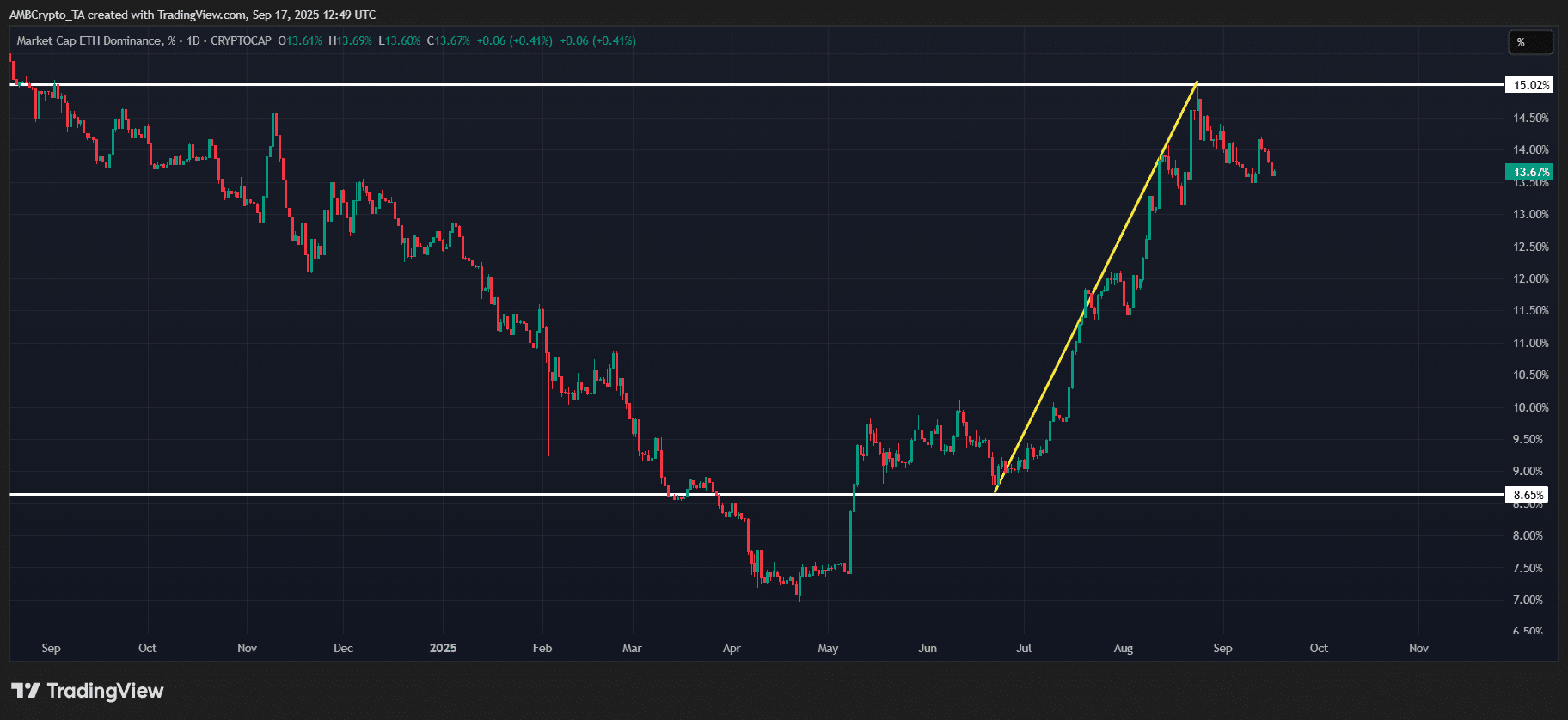
Source: TradingView (ETH.D)
And, it didn’t stop there.
Even big-cap alts usually tethered to BTC broke the correlation. Solana dominance [SOL.D] hit an early-Q1 peak of 3.36%, fueled by heavy institutional inflows. In short, 2025 turned out to be bullish for Layer-1s.
Why? With stablecoin rails under regulatory watch, L1s stole the spotlight. The logic is simple – These L1s let investors tap blockchain for real-use cases (cross-border txs, DeFi rails etc.), putting capital to work directly on-chain.
Macro headwinds keep crypto crash fears alive
The April FUD was a wake-up call for the crypto market.
It showed institutional flows cut both ways. When Trump slashed tariffs, branding it “Liberation Day”, BTC crashed from a $109k all-time high to $74k as ETFs bled billions.
End result? BTC printed its worst Q1 since 2018, and the total crypto market cap slid to $2.50 trillion, wiping nearly $1 trillion in under 90 days. In short, crypto crashed under macro weight, sidelining institutional flows.
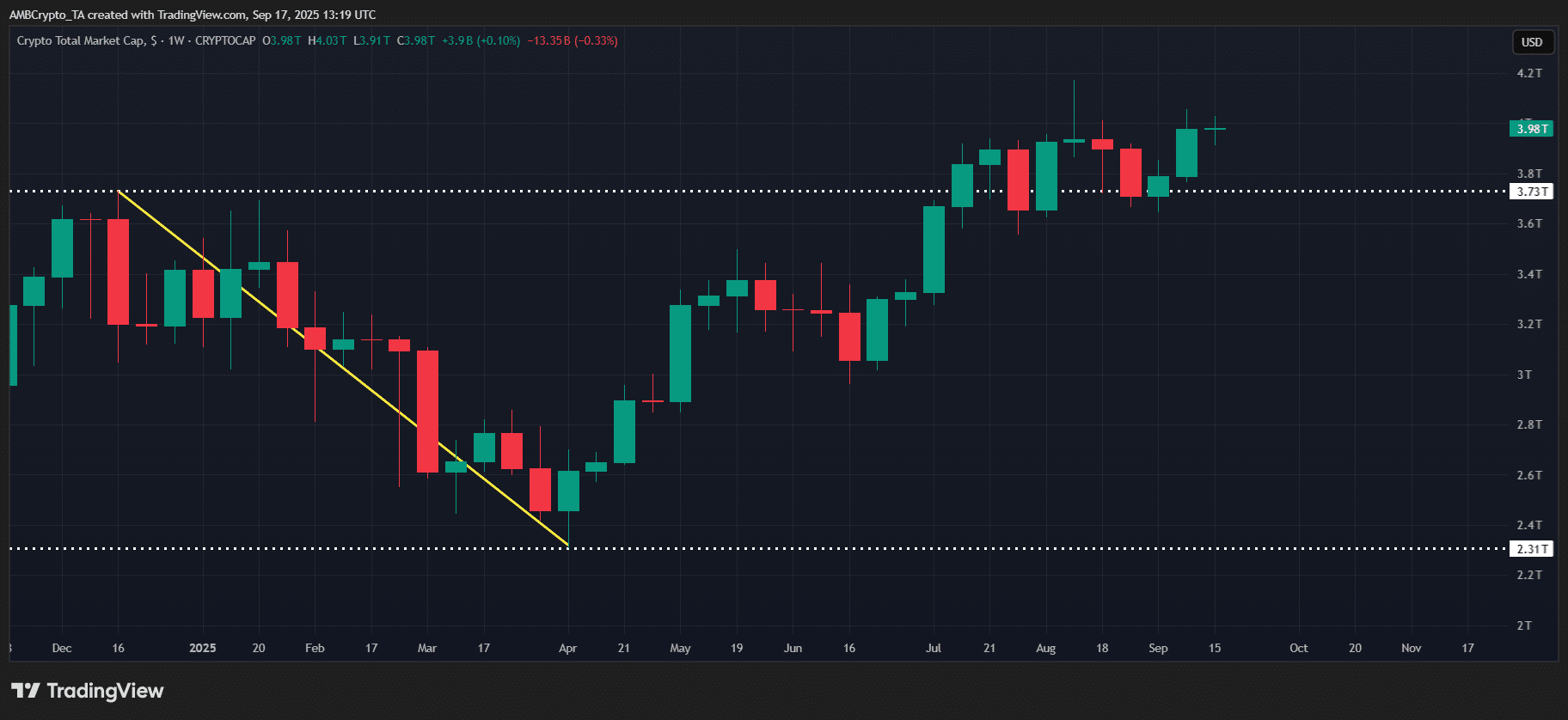
Source: TradingView (TOTAL/USDT)
More importantly, the impact showed up on-chain too.
Bitcoin fees, which ripped to $2 million during the election run, have cooled back to $500k. That could allude to weaker on-chain momentum, with the rally now riding more on speculative capital than organic activity.
Against that backdrop, the risk of a crypto crash stays alive. BTC’s bull runs look choppy, with both Q3 ATHs fading fast as profit-taking sparked long squeezes instead of any real follow-through.





![Real-world assets [RWA]: How to invest in Gold & Real Estate on-chain](https://eng.ambcrypto.com/wp-content/uploads/2026/02/Samyukhtha-5-400x240.webp)